|
|
Introduction -
Collection and Evolution of Whalecraft -
Links to Other Resources -
Purpose -
Main Menu
The term "whalecraft" refers to the various tools and instruments used during the nineteenth century for hunting whales and processing blubber into whale oil. These tools were primarily used by hand on wooden, sail-powered whaling ships that roamed the seas globally. The final whaling expedition in the United States was undertaken by the whaling schooner John R. Manta in 1925, marking the end of the era of hand-harpoon whaling and traditional whalecraft as detailed here.
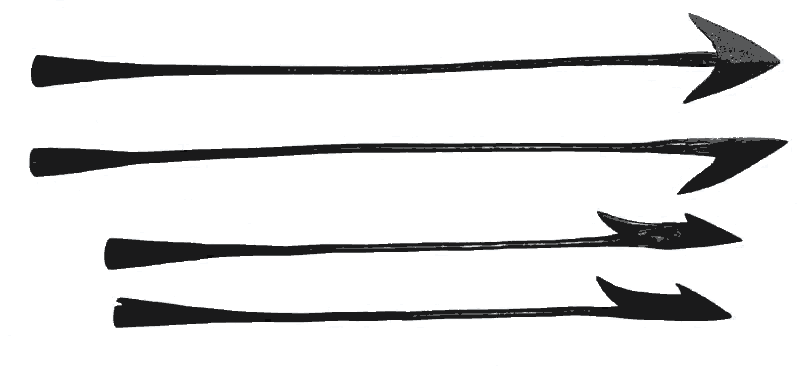
Basic Harpoon designs; two-flue, single-flue, Temple iron and toggle iron.
Author's collection Collection and Evolution of WhalecraftThis website features an extensive collection of whalecraft, detailing the evolution of harpoons and other whaling tools. It provides information about the craftsmen who designed and made these tools and the whalers who used them. To give a comprehensive view, the site includes illustrations and descriptions of the various whalecraft items and the methods used in the whaling industry. This is an independent website and not officially associated with the New Bedford Whaling Museum. Several years ago, I
In addition to the extensive collection of whalecraft showcased on this website, visitors will find detailed accounts of the cultural and historical contexts in which these tools were developed and used. The website aims to serve as a resource for researchers, historians, and students alike, providing insights into the ingenuity and craftsmanship of the whaling industry. Links to Other ResourcesThe Links page offers connections to other whaling and maritime museums worldwide. Your suggestions to expand this list are welcome. When researching the fascinating world of whales, it's helpful to explore various resources that can deepen your understanding of these magnificent creatures. We've compiled a list of recommended links that provide valuable information on whale species, their habitats, and the latest research in marine biology. Whether you're a student, educator, or just someone with a keen interest in marine life, these resources will enhance your knowledge and appreciation of whales. 
PurposeThe primary aim of this website is to compile a comprehensive collection of whalecraft and related information for research and educational purposes. Additionally, it seeks to capture and preserve this knowledge before it fades from memory. To achieve this, contributions of relevant information and illustrations from museums, collectors, researchers, students, and historians worldwide are encouraged. The result will be a continually growing collection of whalecraft and related data available for everyone. Whaling was an international endeavor; whaleships frequently met on the high seas, sharing ideas, information, whalecraft designs, and the implements themselves. Thus, the study of whalecraft is incomplete without examples and information from whaling nations worldwide.
Main MenuTo explore, click on a whale stamp for a general topic or choose a specific topic:
Click on the whale stamp image labeled "Harpoons" for general information, or select a specific topic for detailed information on that harpoon type, including two-flue, single-flue, toggle, explosive, or poison harpoons.
© Website originally created by Thomas G. Lytle.
| |||||||||||||||||||
|